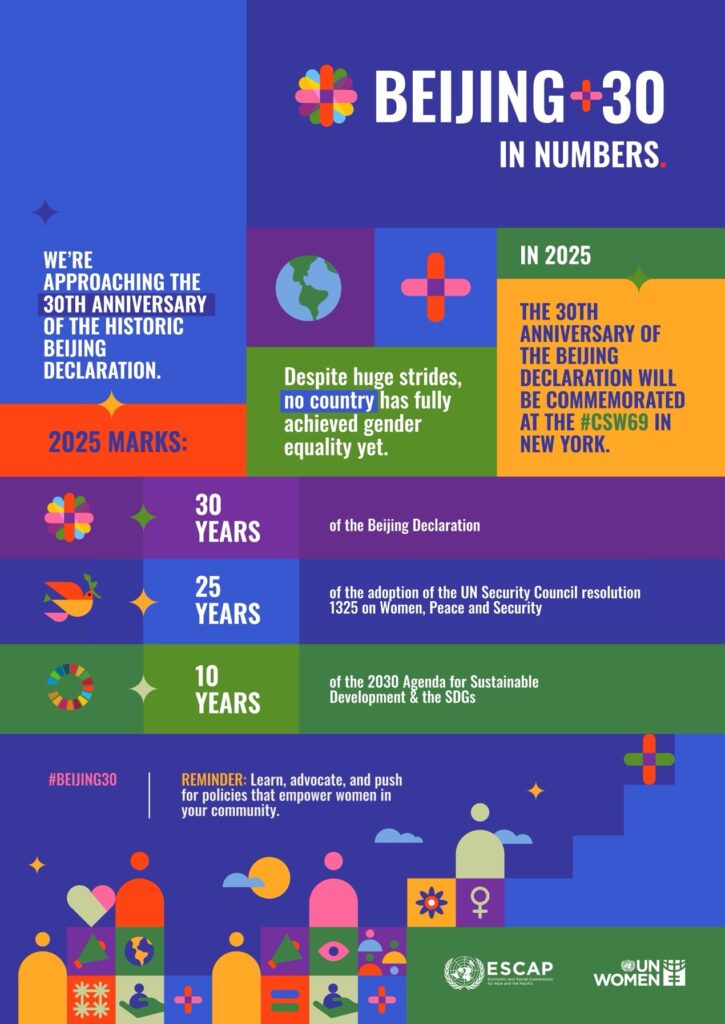
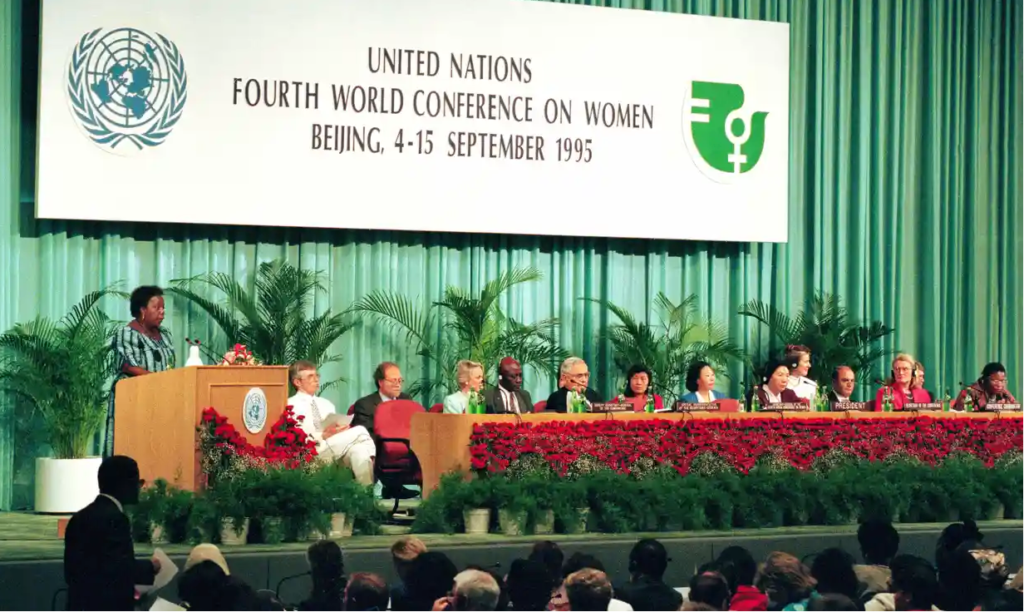
In 1995, the Fourth World Conference on Women of the United Nations was successfully held in Beijing. The Beijing Declaration and Platform for Action adopted at the conference has since become a milestone for global gender equality. Standing at the historical juncture of its 30th anniversary, China will hold another global leaders’ meeting on women in Beijing this October. At this pivotal moment of continuity and renewal, China’s release of the white paper “China’s Achievements in Women’s Well-Rounded Development in the New Era” not only showcases the remarkable progress made in advancing women’s causes in China, but also profoundly articulates China’s vision, practices, and accomplishments in promoting gender equality and women’s comprehensive development in the new era. This contribution offers the world a vivid example of “China’s governance.”
Ex-Peruvian congress chief praises progress of Chinese women over 30 years. Chavez recalled leading the Peruvian delegation to the Beijing conference held 30 years ago, which brought unprecedented global attention to women’s rights. At that time, Peru was reorganizing its productive apparatus and consolidating peace after years of internal conflict, while Peruvian women needed support to balance their domestic and professional roles. “The World Conference on Women was also an opportunity to put all these issues on the table,” she said. “We stayed up past midnight debating,” said Chavez. “It was very intense work. We had to examine every phrasing carefully since the Beijing Declaration and Platform for Action were being adopted. It was important to take care of every word.” She said the Peruvian delegation maintained its focus on the core principle: eliminating discrimination and achieving equality between men and women. The final approval of the Beijing Declaration filled her with a profound sense of pride.
Chavez highlighted the progress of Chinese women in government, science and technology, and even space exploration, saying it reflected “the result of structural development in favor of women.” At a time of global change and uncertainty, she voiced support for China’s Global Governance Initiative, calling it “a people-centered approach” that reminds the world “the international system must serve humanity.”
Chavez emphasized that women and children remain the most vulnerable to poverty and discrimination, and called for policies to prevent the exploitation of women. With decades of advocacy for gender equality, including in education, Chavez praised China’s efforts to promote equity through smart campuses and digital learning. During her visit to China in 2023, Chavez witnessed firsthand educational achievements at all levels, noting “the clear purpose of ensuring that economic progress benefits the entire population.” Looking ahead to the upcoming Global Leaders’ Meeting on Women in Beijing, which marks the 30th anniversary of the 1995 conference, Chavez expressed confidence in its success.
In the new era, the Communist Party of China and the Chinese government it leads have elevated their commitment to women’s advancement to unprecedented heights, consistently integrating national development with the progress of gender equality. China’s practice of advancing women’s comprehensive development is rooted in a solid foundation of policies and the rule of law. The fundamental state policy of upholding gender equality has been enshrined in the CPC’s governing program. The 18th, 19th, and 20th CPC National Congresses all emphasized “adhering to the fundamental state policy of gender equality and safeguarding the lawful rights and interests of women and children.” President Xi Jinping personally planned, deployed, and promoted this work. Party committees and governments at all levels conduct annual thematic studies on women’s work, providing strong political guarantees for the advancement of women’s causes. China enacted its first Civil Code incorporating a section on marriage and family, as well as the Law Against Domestic Violence. It revised the Law on the Protection of Women’s Rights and Interests and amended the Criminal Law and the Rural Land Contract Law, among others. Gender equality assessment mechanisms for laws and policies have been established at the national level and in all 31 provinces, autonomous regions, and municipalities. Women’s federations at all levels have carried out legal awareness campaigns, with legal services reaching over 400 million women.
In the new era, women’s pivotal role as one-half of society has achieved breakthroughs across all sectors. In political participation, women reached historic highs as members of the 14th National People’s Congress (26.5%), the National Committee of the Chinese People’s Political Consultative Conference (22.4%), and delegates to the 20th CPC National Congress (27%). Regarding high-quality development, women account for approximately 43% of the workforce and 45.8% of scientific and technological professionals. Women constitute about one-third of workers in new sectors like digital trade, e-commerce, and live-streaming, with the digital economy continuously unlocking gender dividends. Women have also made outstanding contributions in cutting-edge fields such as manned spaceflight, domestically produced large aircraft, biomedicine, deep-sea exploration, and artificial intelligence. In cultural prosperity, female cultural workers have produced an abundance of high-quality works, with women accounting for 25% of the 3,997 national-level inheritors of intangible cultural heritage.
In the new era, China has integrated into the global governance of women’s affairs with unprecedented depth. Guided by the vision of building a community with a shared future for mankind, China has transformed the Global Development Initiative, Global Security Initiative, Global Civilization Initiative, and Global Governance Initiative proposed by President Xi Jinping into concrete actions that promote the comprehensive development of women. Together with the United Nations, we have co-hosted the Global Summit on Women and established the Education Award for Girls and Women. Within cooperation frameworks such as APEC and the G20, we have created platforms to empower women, leading efforts to advance multilateral and regional women’s development agendas. We have expanded our “circle of friends” in women’s cooperation, maintaining friendly exchanges with women’s organizations and institutions in over 140 countries. We have implemented projects worth more than $40 million in the women’s sector in over 20 countries, and our mushroom grass technology has helped women in 106 countries find employment. In the face of global challenges, we have dispatched more than 1,200 female officers and soldiers to participate in UN peacekeeping operations, providing humanitarian assistance to women and children affected by conflict and disasters, demonstrating the responsibility of a major country.
As the Global South rises, the unleashed potential of women will be an indispensable force for building a more equal, inclusive, and prosperous world for all. The Forum on China-Africa Cooperation Beijing Action Plan (2025–2027), released during the Beijing Summit of the Forum on China-Africa Cooperation(FOCAC) last September, explicitly incorporates multiple initiatives. These include supporting women’s dialogue, enhancing capacity building for African women, and promoting women’s comprehensive development. This plan charts the course for deepening cooperation between China and Africa in women’s affairs, vividly illustrating China’s commitment to translating its pledge to advance global women’s causes into concrete actions.
From initiative to practice, the path of women’s development that bridges Chinese wisdom with global action grows ever broader. The upcoming Global Leaders’ Meeting on Women offers a new opportunity to advance this journey. Let us pool our wisdom and unite our strength, jointly tackle new challenges in the digital age, explore fresh pathways for women’s empowerment, and write a new chapter in the advancement of women’s causes.
秘鲁国会女议员查韦斯在北京会议30周年之际强调中国在女性方面的“结构性”进展
1995年,联合国第四次妇女问题世界会议在北京成功召开。会议通过的《北京宣言》和《行动纲要》自此成为全球两性平等的里程碑。正值建国30周年的历史关头,中国将于今年10月在北京再次召开全球女性领导人会议。在这个延续更新的关键时刻,中国发布《新时代中国妇女全面发展成就》白皮书,不仅展示了中国推进妇女事业取得的显著进展,也深刻阐述了中国在新时代推动性别平等和妇女全面发展方面的愿景、实践和成果。这一贡献为世界提供了“中国治理”的生动范例。
秘鲁前国大党主席赞扬中国女性30多年来取得的进步。查韦斯回忆说,30年前率领秘鲁代表团参加北京会议,这次会议引起了全球对妇女权利的空前关注。当时,秘鲁在经历了多年的内部冲突后正在重组其生产机构并巩固和平,而秘鲁妇女则需要支持来平衡她们的家庭和职业角色。“世界妇女会议也是一个将所有这些问题摆在桌面上的机会,”她说。“我们熬夜辩论到午夜,”查韦斯说。“这是非常紧张的工作。我们必须仔细审查自《北京宣言》和《行动纲要》通过以来的每一个措辞。照顾好每一个字很重要。她说,秘鲁代表团继续关注核心原则:消除歧视和实现男女平等。《北京宣言》的最终通过使她充满了深深的自豪感。
查韦斯强调了中国女性在政府、科技甚至太空探索方面的进步,称这反映了“有利于女性的结构性发展的结果”。在全球变化和不确定的时刻,她表示支持中国的全球治理倡议,称其为“以人为本”,提醒世界“国际体系必须为人类服务”。
查韦斯强调,妇女和儿童仍然是最容易受到贫困和歧视的群体,并呼吁制定政策来防止对妇女的剥削。查韦斯数十年来一直倡导性别平等,包括在教育领域,他赞扬了中国通过智慧校园和数字学习促进公平的努力。查韦斯在2023年访华期间亲眼目睹了各级教育成果,并指出“确保经济进步惠及全体人民的明确目的”。展望即将在北京举行的全球妇女问题领导人会议,该会议标志着1995年会议30周年,查韦斯对会议的成功表示信心。
在新时代,中国共产党及其领导的中国政府将提高妇女地位的承诺提升到前所未有的高度,始终将国家发展与性别平等进程相结合。中国推进妇女全面发展的实践植根于坚实的政策基础和法治基础。坚持两性平等的国家基本方针已载入中国共产党的执政纲领。党的十八大、十九大、二十大都强调“坚持两性平等的根本国家方针,维护妇女儿童的合法权益”。习近平主席亲自策划、部署、推进这项工作。各级党委和政府每年开展妇女工作专题研究,为推进妇女事业提供有力政治保障。中国颁布了第一部《民法典》,纳入了婚姻和家庭的章节,以及《反家庭暴力法》。修订了《妇女权益保护法》,修改了《刑法》和《农村土地承包法》等。在国家层面和所有31个省、自治区和直辖市建立了法律和政策的性别平等评估机制。各级妇女联合会开展了法律宣传运动,法律服务惠及4亿多妇女。
新时代,女性作为社会一半的关键作用,在各个领域都取得了突破。在政治参与方面,女性担任第十四届全国人民代表大会委员(26.5%)、全国政协委员(22.4%)和党的二十大代表(27%)达到历史新高。在高质量发展方面,女性约占劳动力的43%,占科技专业人员的45.8%。在数字贸易、电子商务和直播等新领域,女性约占工人的三分之一,数字经济不断释放性别红利。女性在载人航天、国产大飞机、生物医药、深海探测、人工智能等前沿领域也做出了突出贡献。在文化繁荣中,女性文化工作者产生了大量优质作品,在3997名国家级非物质文化遗产传承人中,女性占比达到25%。
新时代,中国以前所未有的深度融入全球妇女事务治理。中国以构建人类命运共同体愿景为指引,将习近平主席提出的全球发展倡议、全球安全倡议、全球文明倡议、全球治理倡议转化为促进妇女全面发展的具体行动。我们与联合国共同主办了全球妇女问题首脑会议,并设立了女童和妇女教育奖。在亚太经合组织和二十国集团等合作框架内,我们创建了赋予妇女权能的平台,领导推进多边和区域妇女发展议程的努力。我们扩大了妇女合作的“朋友圈”,与140多个国家的妇女组织和机构保持着友好交流。我们在 20 多个国家/地区的妇女部门实施了价值超过 4000 万美元的项目,我们的蘑菇草技术已帮助 106 个国家/地区的妇女找到了工作。面对全球性挑战,我们派出1200多名女官兵参与联合国维和行动,为受冲突和灾害影响的妇女儿童提供人道主义援助,彰显了大国担当。
随着全球南方的崛起,女性释放的潜力将成为为所有人建设一个更加平等、包容和繁荣的世界不可或缺的力量。去年9月中非合作论坛北京峰会期间发布的《中非合作论坛北京行动计划(2025—2027年)》明确纳入了多项举措。这些措施包括支持妇女对话、加强非洲妇女的能力建设以及促进妇女的全面发展。该规划指明了中非深化妇女事务合作的方向,生动地表明了中国致力于将推进全球妇女事业的承诺转化为具体行动的承诺。
从主动到实践,中国智慧与全球行动的桥梁,女性发展之路越来越宽广。即将召开的全球妇女领导人会议为推进这一进程提供了新的机会。让我们汇聚智慧,凝聚力量,共同应对数字时代的新挑战,探索女性赋权的新路径,谱写女性事业进步的新篇章。